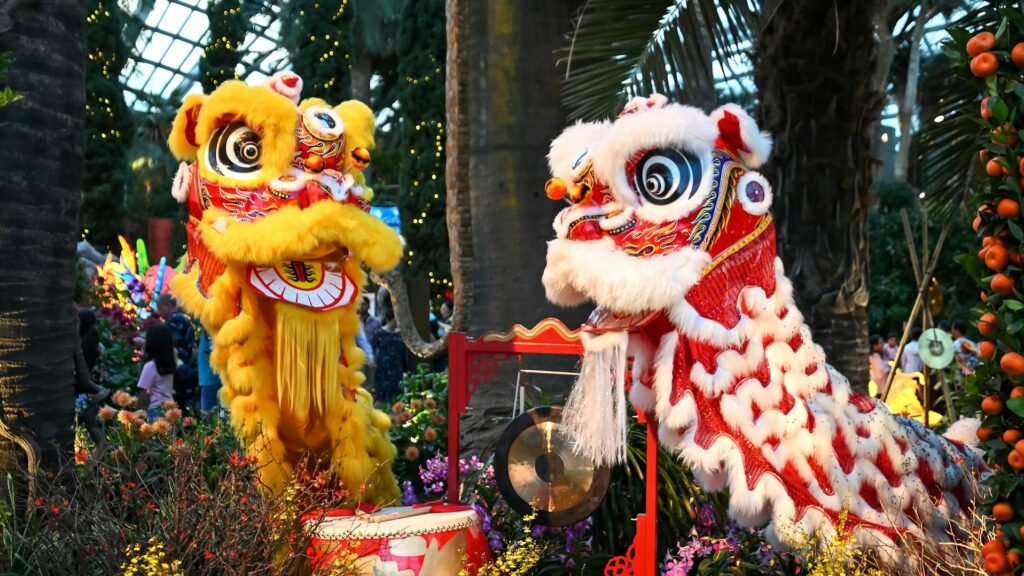
Chinese New Year reveals Singapore from a different side — as a living Asian city shaped by memory, rituals, and character. During this time, traditions spill out onto the streets, food becomes part of the spectacle, and even an ordinary walk turns into a meaningful journey, making the city especially fascinating for travellers.
In this article, you’ll find practical advice on where to go, when to arrive, and where to find the main Chinese New Year events in Singapore.
When to Visit and How to Plan Your Days
Chinese New Year in Singapore follows the lunar calendar. In 2026, the main festive events officially take place from 17 to 28 February, covering both the New Year itself and the days of festival events that follow.
Unlike in many other countries, Chinese New Year in Singapore is not a single-day event but a full festival period, featuring street parades, performances, cultural shows, and evening celebrations.
Festival Period
- From late January to late February — street shows, lion dances, markets, and workshops take place throughout this entire period.
Key Dates
- January 30 — official opening of the celebrations
- February 17–18 and February 16 (New Year’s Eve) — the first days of Chinese New Year
- February 27-28 — the main Chinese New Year parade
Main Chinese New Year Events
Chinatown — the Heart of Celebrations
🕘 When: late January to late February
📍 Google Maps: Chinatown
The best way to experience Chinatown during Chinese New Year is walking on foot. Stroll through the streets, each showing the festival from a different angle:
- Pagoda Street — the most vibrant and tourist-friendly part of the route, filled with lanterns, decorations, and souvenir shops.
📍 Google Maps: Pagoda Street - Smith Street — the centre of street food and festive bustle, where the rhythm of the celebration is most strongly felt.
📍 Google Maps) Smith Street - Temple Street — a calmer, more atmospheric street perfect for leisurely walks and photos.
📍 Google Maps: Temple Street
The best times to catch street performances are around lunch (approximately 1:00-2:00 PM) and after 7:00 PM, when the festive lighting comes alive.
Chinese New Year Opening Ceremony & Festive Light-Up
🕘 When: January 30, 2026, 6:00 PM
📍 Google Maps: Kreta Ayer Square (Chinatown)
The official lighting-up and Chinese New Year opening ceremony in Chinatown marks the symbolic start of the festive season, with a cultural programme showcasing Singapore’s multicultural identity.
Among the key highlights is a horse-inspired dance performance, blending Chinese dance with Malay Kuda Kepang, Indian Rajasthani horse dance, and elements of Western choreography.
New Year’s Eve Countdown Party
🕘 When: February 16, 2026, 10:00 PM
📍 Google Maps: Kreta Ayer Square (Chinatown)
On Chinese New Year’s Eve, Chinatown traditionally hosts the Countdown Party — an evening event where the city welcomes the new lunar year together.
The evening programme typically includes:
- live stage performances and music
- cultural shows and festive atmosphere throughout Chinatown streets
- countdown to the New Year
This is one of the most energetic and emotional moments of the entire festive period, when Chinatown fills with people, music, and anticipation for the new lunar year.
Chingay Parade: Singapore’s Main Chinese New Year Show
🕘 When: February 27–28, 2026, 8:00 PM
💰Cost: from SGD 20 (check prices on the official website)
📍 Google Maps: F1 Pit Building (Marina Bay area)
Chingay Parade is Singapore’s largest festive show and one of the most spectacular events of the entire Chinese New Year season. It is not just a parade, but a large-scale outdoor performance combining choreography, music, lighting effects, and massive moving floats.
What sets Chingay apart from other celebrations is its scale and theatrical format. While Chinatown offers street-level traditions, Chingay delivers a full open-air spectacle comparable to world-class carnivals.
💡 Tip: buy tickets in advance — seats on the grandstands sell out quickly.
Can You Watch the Chingay Parade for Free?
Yes, it’s possible to see Chingay Parade for free. Free viewing areas are located along the parade route around the F1 Pit Building. From there, you can see the floats and performances, though views are not guaranteed and seating is not provided.
Chinese New Year at Gardens by the Bay
📍 Google Maps: Gardens by the Bay
During Chinese New Year, Gardens by the Bay offers a calmer, visually stunning alternative to the bustling Chinatown.
During the festive period, the gardens typically feature:
- thematic decorations inspired by the zodiac year
- light and floral installations
- evening illumination that makes walks especially atmospheric
Gardens by the Bay is especially well suited for an evening stroll after a busy day in Chinatown or before attending the Chingay Parade.
Where to Stay During Chinese New Year
- Chinatown — full immersion in the festive atmosphere
📍 Google Maps: Chinatown - Tanjong Pagar — a balance of atmosphere and comfort
📍 Google Maps: Tanjong Pagar - Marina Bay — stunning views of the modern city, but less local atmosphere
📍 Google Maps: Marina Bay
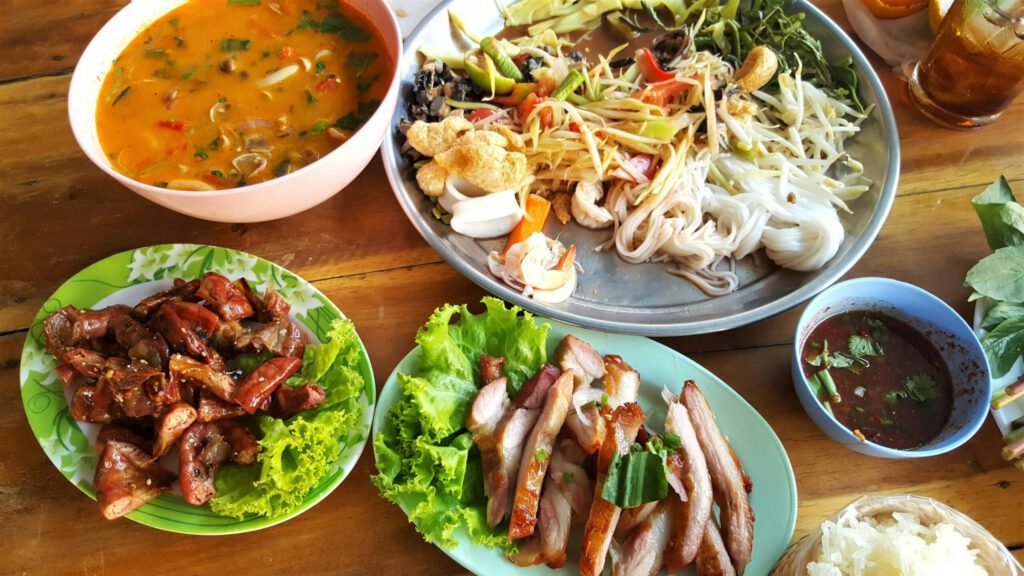
Festive Food During Chinese New Year
Food is an essential part of the celebration, and many dishes carry symbolic meaning:
- Yu Sheng — a raw fish salad tossed together with chopsticks to wish prosperity and good fortune
- Bak Kwa — sweet and savoury dried meat, symbolising abundance
- Pineapple tarts — traditional pineapple cookies, symbol of wealth and prosperity
- Mandarin oranges — given in pairs as a symbol of luck and blessings
Where to Try Festival Foods
Chinatown Complex Food Centre
📍 Google Maps: Chinatown Complex Hawker Centre (Chinatown)
During Chinese New Year, this is one of the most authentic places to try festive food in a casual, local setting. Locals come here to:
- eat between street performances and walks around Chinatown,
- try classic dishes without tourist mark-ups,
- experience the genuine, informal side of the celebration.
Tanjong Pagar Restaurants
📍 Google Maps: Tanjong Pagar (near Chinatown)
Tanjong Pagar is ideal for those who prefer to celebrate Chinese New Year over a sit-down meal in a calmer setting. The area is home to many Chinese restaurants — from traditional to modern — that:
- offer special Chinese New Year menus,
- are suitable for family dinners and festive gatherings,
- provide a comfortable alternative to busy Chinatown.
Frequently Asked Questions (FAQ)
1. What day is Chinese New Year celebrated in Singapore?
Chinese New Year falls on the first day of the lunar calendar. The date changes every year and usually falls in late January or February. In 2026, Chinese New Year is on 17 February.
2. Do shops and restaurants stay open during the celebrations?
Large shopping centers remain open, but family-owned shops and restaurants may close for 1–2 days.
3. Do I need to book hotels in advance?
Yes, hotels in Singapore during Chinese New Year should be booked in advance. Prices rise and popular options get booked quickly.
4. Is it worth visiting Singapore for Chinese New Year?
Yes, it’s one of the most vibrant and atmospheric times of the year. The city is decorated, street performances and parades take place, and it’s a rare chance to see Singapore as both modern and deeply cultural.
You May Also Like
- Singapore in One Day During a Layover: A Ready-Made 6–12 Hour Itinerary
- Wintering in Phuket: An Honest Review and Real Life by the Sea
- One Day in Bangkok: Best 1-Day Itinerary for First-Time Visitors
Useful Links & Official Sources
Visit Singapore Official Tourism Website
https://www.visitsingapore.com
Here you’ll find current events, festivals, Chinese New Year dates, official events, as well as route ideas and attractions throughout the city.
Chingay Parade — Schedule and Tickets
https://www.chingay.gov.sg
Official website of the main festive parade. Here you’ll find exact dates, Marina Bay grandstand information, and ticket sales.
MRT Metro Map (Land Transport Authority)
https://www.lta.gov.sg
Official Singapore metro map.